Skip to content

Now scheduling projects

+1 (239) 359-8463

Land Grading · Cape Coral, Lee County, FL

Flat groundstill needsa grade.

▸ Built up, not just levelled

Land grading in Cape Coral: bringing platted lots up to elevation, building pads, driveway grade and drainage that works on ground with almost no natural fall.

What grading actually is

Cut the high. Fill the low.
Make the water leave.

Every graded site is the same three moves. What changes is how much ground has to move, where it comes from, and how tight the finished surface has to be.

Schematic cross-section — not a survey. The fall is exaggerated so the principle reads.

Two stages, two prices

Rough grading and finish grading are not the same job.

Most quotes that go wrong go wrong here. Ask which one you are buying — a site brought roughly to shape and a site finished to tolerance are different amounts of work and different amounts of money.

Stage one

Rough grading

The ground is moved to within striking distance of the target: high spots cut down, low spots filled, the shape of the site established. This is where the cut and fill balance gets decided and where most of the machine hours go.

  • Bulk earthmoving
  • Cut and fill balance
  • Subgrade shaped
  • Compaction in lifts
Stage two

Finish grading

The last few inches, held to tolerance. Finish grade is what a slab, a driveway or a sod line actually sits on, and it is where the difference between a good site and a callback lives.

  • Tight tolerance
  • Slope verified
  • Surface uniform
  • Ready for the next trade

How the work gets judged

Five things a finished grade has to do.

A site can look level and still be wrong. These are the checks that decide whether the grade holds up once there is a building, a driveway and a rainy season on it.

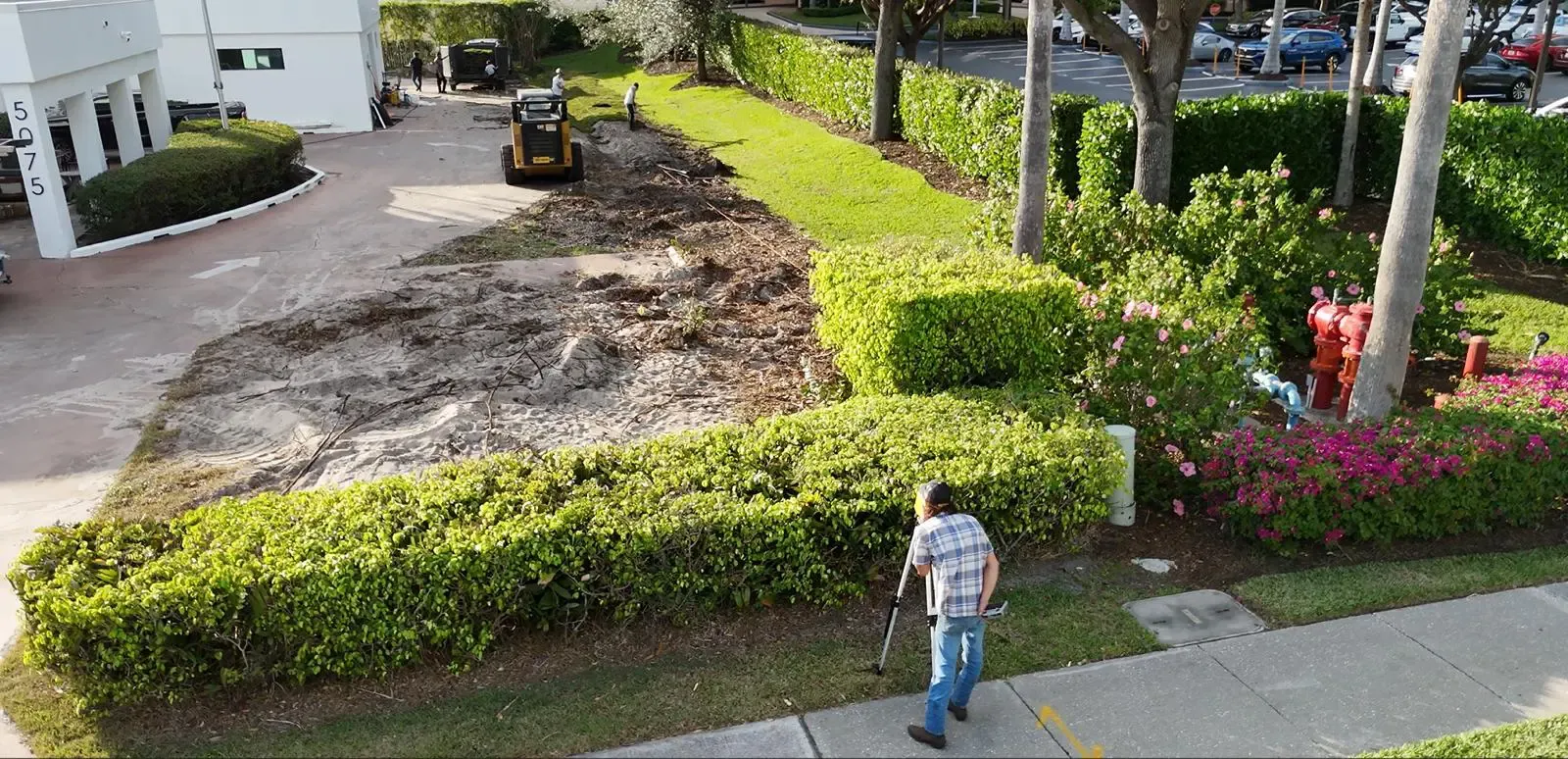
Skid steer shaping a commercial site to finished grade — Hector Tractor, Naples, FL
  1. 01

    Send water away

    A grade that does not move water is not a grade, it is a shape. Fall away from the structure, swales that carry it off, and no low point where there should not be one.

  2. 02

    Hold the elevation

    The finished level has to be the one on the plan, and it has to still be there in a year. That is a compaction question as much as a shaping one.

  3. 03

    Carry the load

    A pad under a slab and a driveway under a concrete truck are different specs. The grade is built for what goes on top of it, not to a single default.

  4. 04

    Meet what it joins

    Grades meet roads, neighbours, existing structures and setbacks. Where they meet is where drainage problems and disputes start if the transition is wrong.

  5. 05

    Stay put until it is covered

    Bare graded ground erodes in one storm. Silt control and stabilisation are part of the job, not an extra line after the fact.

The ground here

On a lot this flat, every inch of fall is built.

Cape Coral is one of the largest inventories of vacant platted residential lots in the country, and they share a problem: the ground is close to level and close to the water table. There is no natural high side to drain toward. Whatever fall the finished lot has is fall that somebody put there on purpose.

That flips the usual grading job. In most places you are cutting a site down to a workable elevation. Here you are far more often building it up — importing fill to reach the finished floor the plan requires, then shaping the fall around it so water leaves the pad and reaches the swale instead of sitting against the slab.

The canal system is the other half of it. Cape Coral drains through hundreds of miles of canals and the swales that feed them, which means your lot is one link in a chain. A grade that dumps water where the next link cannot take it is a grade that causes an argument, and sometimes a call from the city.

How much fill to reach elevation
This is the price on a Cape Coral lot. The gap between existing grade and required finished floor, times the area, decides most of the quote before anything else is considered.
Imported material, not balanced
Flat lots rarely balance — there is no high ground to take from. Most of the volume is bought and trucked, which is why fill goes on its own line in our scope.
The swale and the canal chain
Water has to reach a swale that can take it. Where your fall goes and how it ties in is as much of the job as the pad itself.
Flood elevation requirements
Much of the city sits in mapped flood zones, and the required elevation follows from that. It is set by the plan and the permit, and the grading is built to it.
Sandy soil and compaction
Sand places and compacts well when it is worked at the right moisture. Dumped and pushed, it looks finished and settles later — which is exactly what shows up as a cracked driveway two years on.


What we grade in Cape Coral

The jobs that come up here.

  • 01

    Lot fill to finished elevation

    The core Cape Coral job: bringing a flat platted lot up to the level the build requires, placed in lifts and compacted rather than dumped.

  • 02

    Building pad grading

    The pad shaped and compacted to the elevation the plan calls for, and checked before anyone pours on it.

  • 03

    Driveway grade and crown

    Fall across the drive so water sheds instead of standing, and a base that holds up under delivery trucks rather than rutting on the first wet week.

  • 04

    Swales and drainage shaping

    The contours that carry water off the lot and away from the structure, tied into wherever the water is supposed to go.

  • 05

    Finish grade for sod and landscape

    The last pass, held to tolerance so sod lays flat, irrigation sits right and the yard drains instead of ponding.

  • 06

    Tie-in to swale and right-of-way

    Shaping the transition between your lot and the swale so water actually leaves, and so the finished grade meets the street the way it is supposed to.

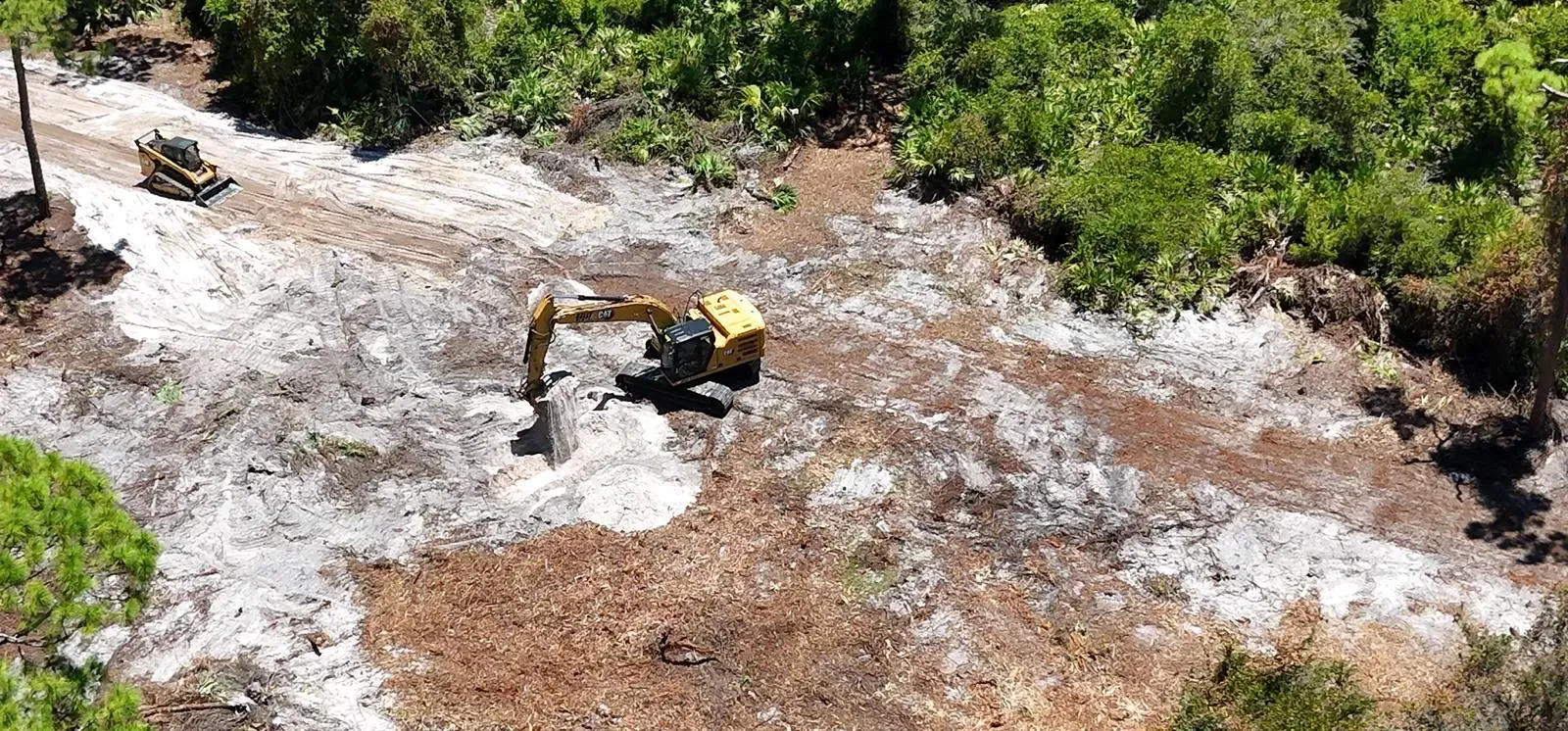
Driveway cut, fill and final grade by Hector Tractor — Lehigh Acres, FL
Driveway cut, fill and final grade — Lehigh Acres, FL

Coverage

Grading across Cape Coral and Lee County

We work Cape Coral north to south — the built-out southeast, the newer northwest, and everything between — plus Fort Myers, North Fort Myers and Lehigh Acres.

  • Cape Coral
  • SW Cape
  • NW Cape
  • SE Cape
  • NE Cape
  • North Fort Myers
  • Fort Myers

Owner-operated crew · Licensed and insured · +1 (239) 359-8463

Before you call

What people ask before grading in Cape Coral

01How much fill will my lot need?

It depends on the gap between the existing ground and the finished floor elevation your build requires, across the area being filled. That gap is the single biggest number on a Cape Coral grading quote, which is why we measure it on the walk instead of estimating it from a plat.

02Why does a flat lot need grading at all?

Because flat is the problem, not the solution. Water only leaves ground that has somewhere to go. On a lot with no natural fall, every inch of slope that carries water off the pad and into the swale has to be built deliberately, or the water stays where it lands.

03Can you balance the site instead of importing fill?

Rarely here, and we will tell you honestly when it is not possible. Balancing needs high ground to cut from, and most Cape Coral lots do not have any. Where there is something to work with we use it, because moving material always beats buying it.

04What about the swale in front of my lot?

It is part of the job. The finished grade has to tie into it so water reaches it and the transition to the street is right. Grading that stops at the property line and ignores the swale is how you end up with water standing at the edge of a brand-new lot.

05Is sandy soil a problem for compaction?

Not when it is worked properly. Sand compacts well in lifts at the right moisture. The failures come from dumping and pushing, which looks finished on day one and settles under the driveway later.

06Do you handle the driveway grade as well as the pad?

Yes, and it should be one scope. The driveway has to shed water and carry delivery trucks, and its grade has to meet both the pad and the street. Splitting it between two contractors is where the transition goes wrong.

07Do you clear the lot too, or only grade?

Both. Most vacant Cape Coral lots need vegetation off before anything can be shaped. We run land clearing as well, so it happens as one sequence rather than two mobilisations.

08How soon can you start?

Usually within days of an approved estimate, depending on weather and on whether the lot needs clearing first. Fill availability can also move a start date, and we tell you if it will.

Hector TractorNaples, FL · +1 (239) 359-8463

Ready tobreak ground?

Tell us the address and what needs to happen. You get a clear scope, a real schedule and one crew that owns the work.