The ground here
On acreage, the driveway is half the grading.
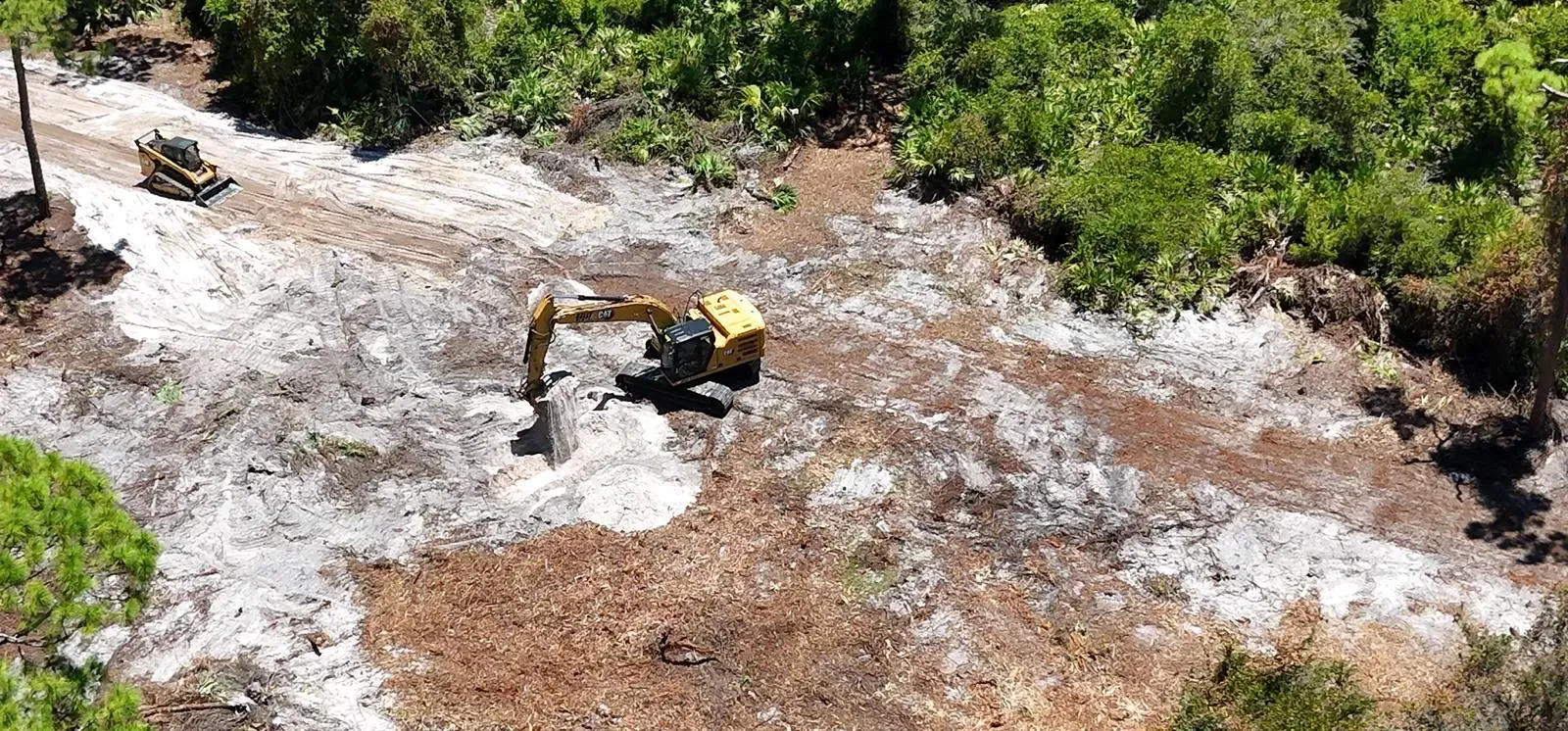
Estates lots run from a little over an acre to ten, with no HOA and, in most of it, well and septic rather than utilities. That combination changes the grading job. You are not shaping a quarter-acre building envelope; you are shaping a pad, a route to it that can be several hundred feet long, and the drainage that has to work across the whole parcel.
The driveway is where most acreage grading budgets actually go, and where most of the callbacks come from. A long run across flat ground with no crown and no fall becomes the lowest line on the property, and once it ruts under a concrete truck it gets rebuilt rather than repaired.
The rest is water. Estates ground is low and it sheets rather than drains in the wet season, so the pad has to sit above what the site does in August, not what it does in February. Get that wrong and you have a house on a pad that works for eight months a year.
- Driveway length and build-up
- Several hundred feet of drive needs crown, fall and a base that carries delivery trucks. On acreage it is frequently the largest single piece of the grading.
- Wet season sheet flow
- Estates ground moves water across the surface rather than through defined channels. The pad elevation has to answer to August, not to the dry season.
- Septic and well separation
- Without utilities, the drainfield and the well both constrain where things sit and how high the pad has to be. The grading works around both.
- How far material has to travel
- On a five-acre parcel the distance between where material is and where it needs to be is itself a cost. Staging and haul routes get planned, not improvised.
- What stays standing
- Most owners keep a treeline or a stand of native pine. What stays decides where machines can work and how the grade has to be shaped around it.