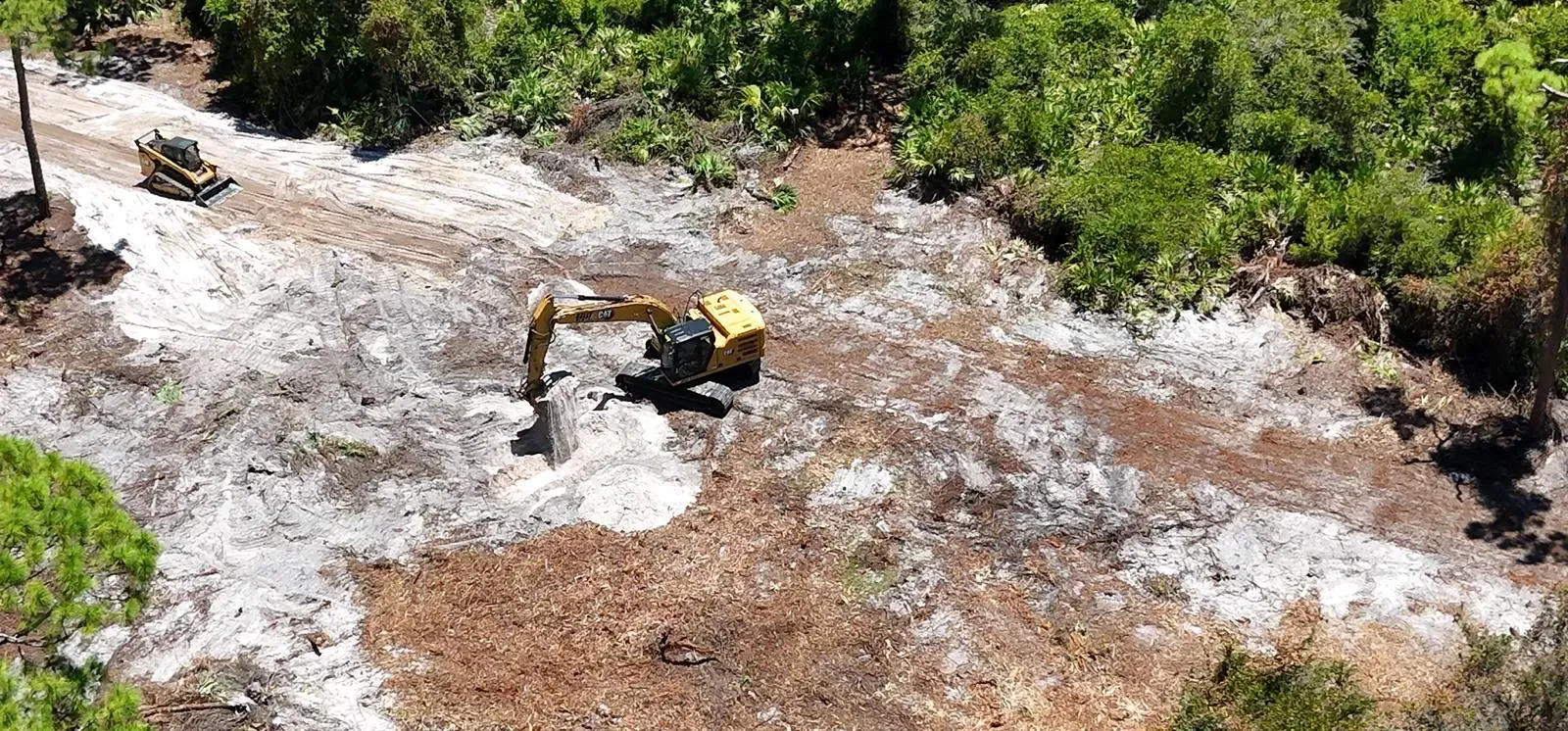
The ground here
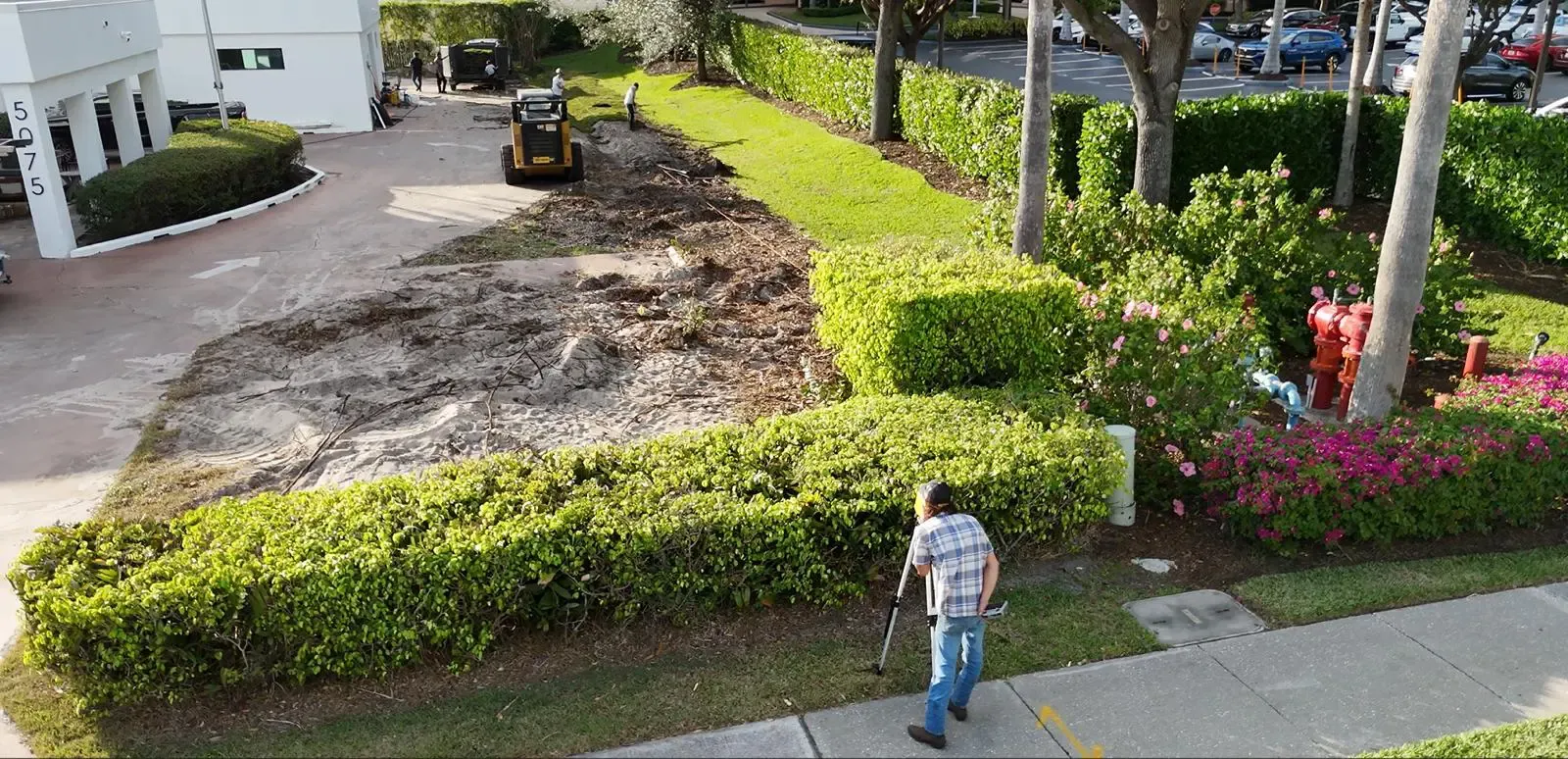
Half the grading work here is fixing an old grade.
Fort Myers is not one market. There is new construction on the edges where the job is a bare lot brought to elevation, and there are decades of established neighbourhoods where the job is correcting ground that was shaped before anybody thought hard about where the water would go.
The second kind is more common than people expect, and it is different work. You are grading around an existing house, mature trees, a driveway you are not allowed to disturb and a neighbour whose lot drains onto yours. The target is not a plan elevation; it is a route for the water that does not create a new problem forty feet away.
Everything here drains toward the Caloosahatchee basin eventually, through swales and canals that were built to a design. Ground that dumps more water into that system than its share is ground that floods somebody, which is why the tie-in matters as much as the pad.
- New lot or existing ground
- Grading a bare lot and correcting a shaped one are different operations. The second is slower, more careful, and priced by access and obstacles rather than by volume.
- What you cannot disturb
- Mature trees, an existing slab, a septic field, a driveway that stays. Every fixed point narrows how the grade can be shaped and adds hours.
- Where the water goes next
- A swale, a canal, a street inlet. Moving water off your ground is only half of it; it has to be somewhere the system can take it.
- Access for the machine
- Infill lots with fences, corners and neighbours decide machine size before preference does. Restricted access is paid in time.
- Wet season timing
- Freshly graded ground rutted by a summer storm is ground that gets regraded. Some work is worth scheduling around the season.