

Clearing & grubbing
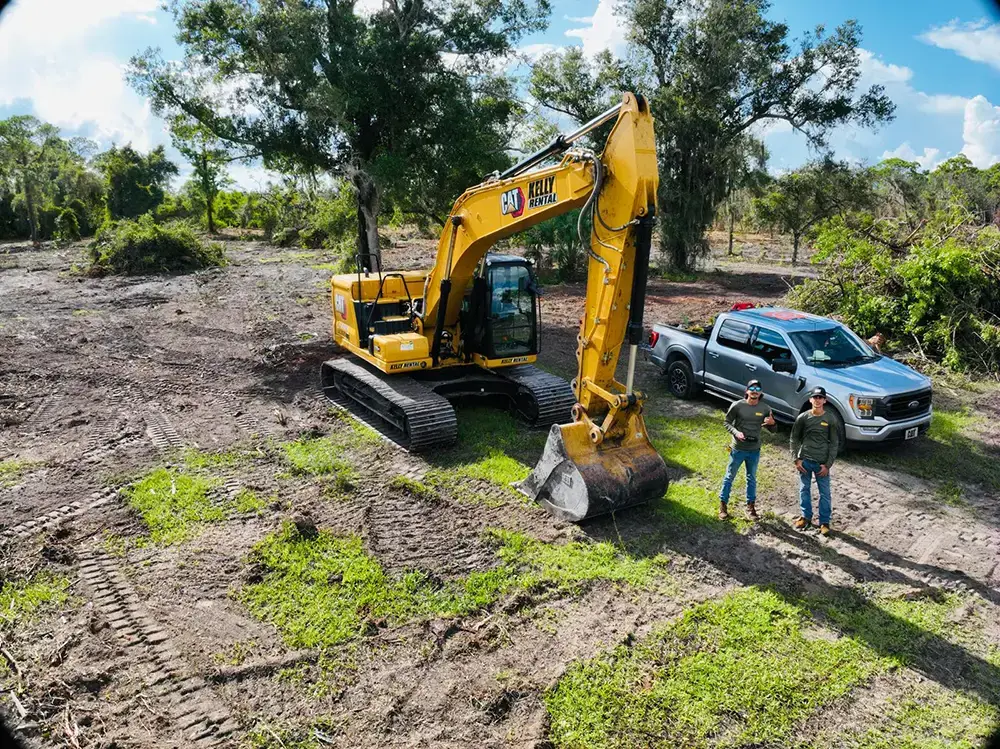
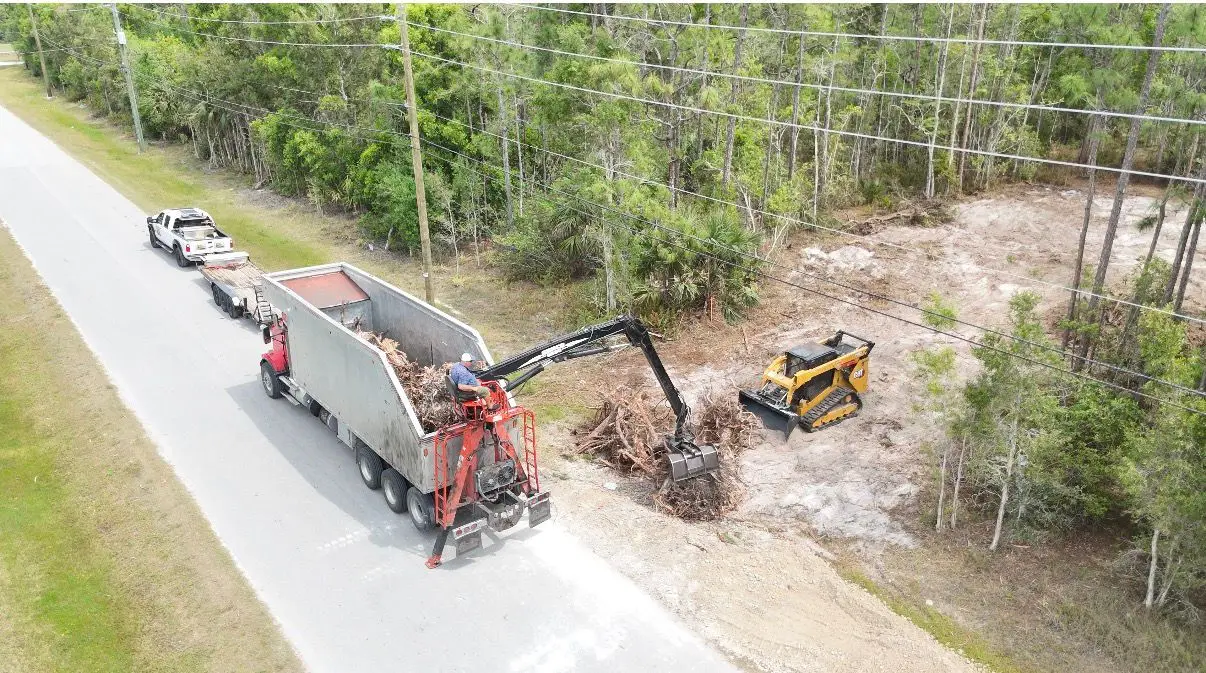
The parcel opened inside the approved limits, with stumps and roots taken out rather than cut off — organic material left behind is what settles later.
Now scheduling projects
+1 (239) 359-8463Southwest Florida · Licensed and insured
Site Development & Earthwork · Southwest Florida
▸ One contract for the whole groundwork
Site development for builders, owners and developers across Southwest Florida — the full sequence that turns a parcel into ground a builder can mobilise onto.
What we do
Site development is not one operation, it is the package that has to happen before construction starts: opening the ground, taking out what will not hold, building it back up to elevation, making the water leave, and getting access in for the trades that follow.
The parcel opened inside the approved limits, with stumps and roots taken out rather than cut off — organic material left behind is what settles later.
Topsoil and organics stripped off the building area, the subgrade proof-rolled to find soft spots, and unsuitable material replaced before it becomes a problem under the slab.
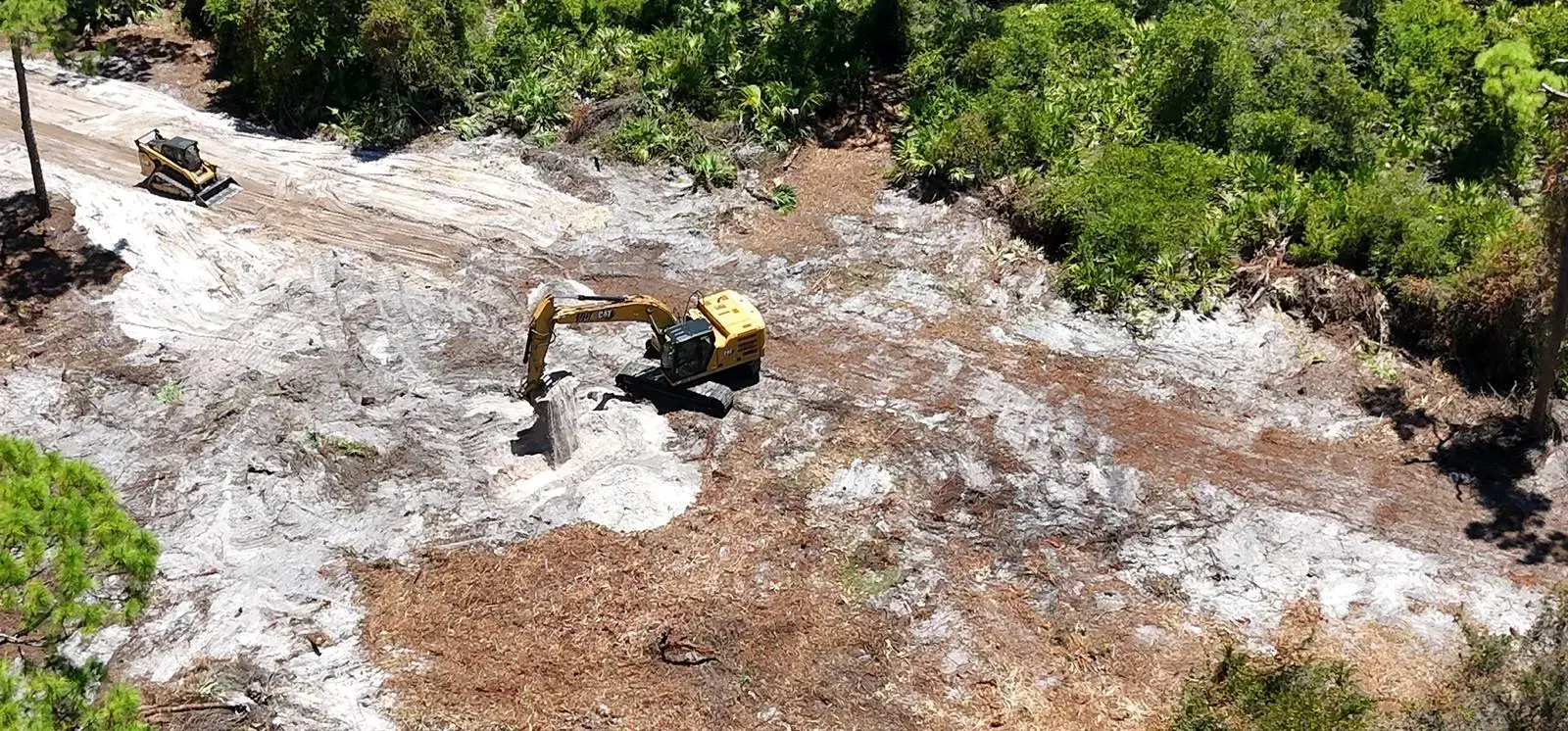
Fill placed in lifts and worked to the moisture it needs, so the pad holds the elevation it was built to instead of settling into it.
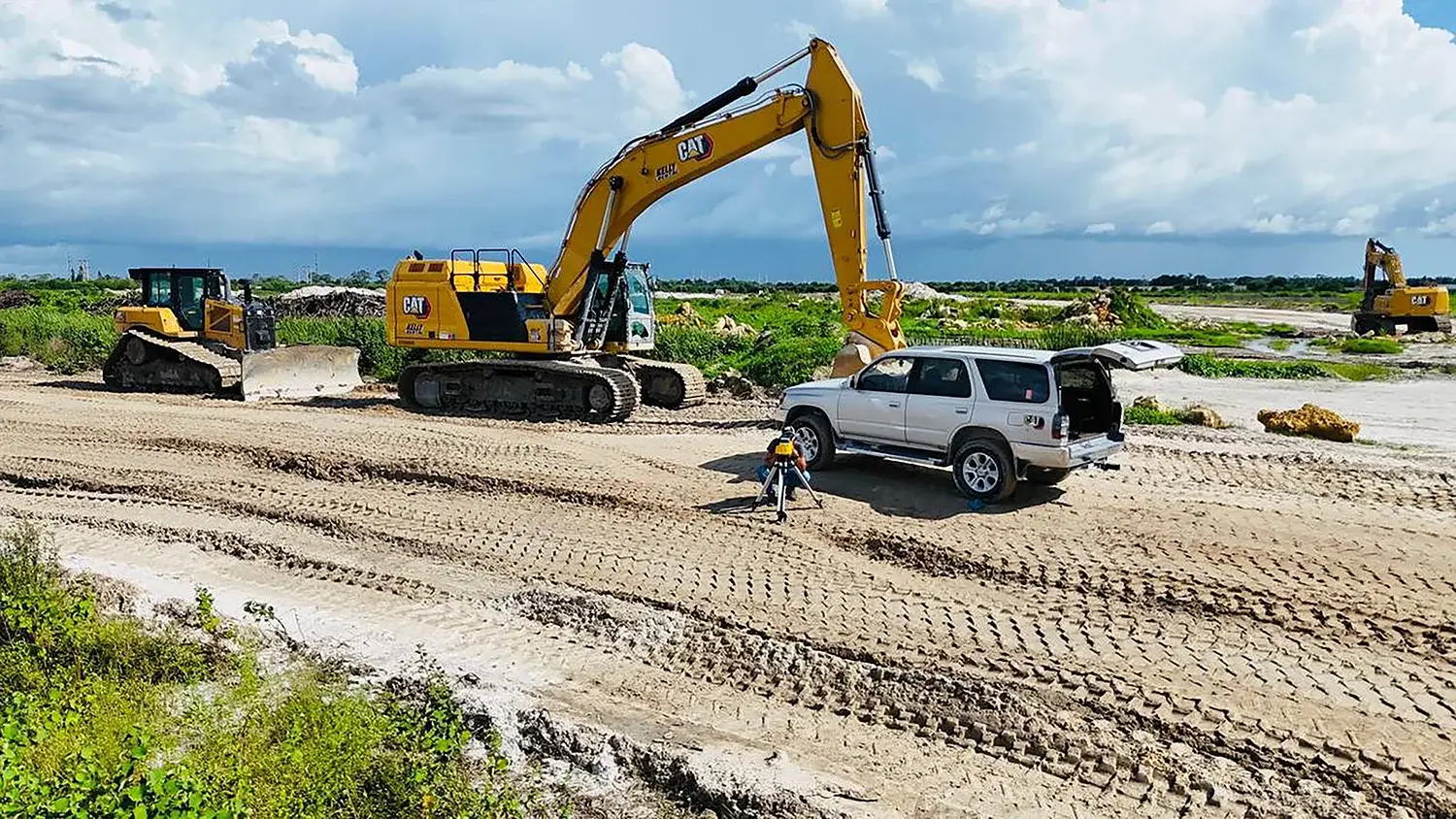
The pad shaped to the elevation on your plan and checked, with swales and contours that send water away from the structure rather than toward it.
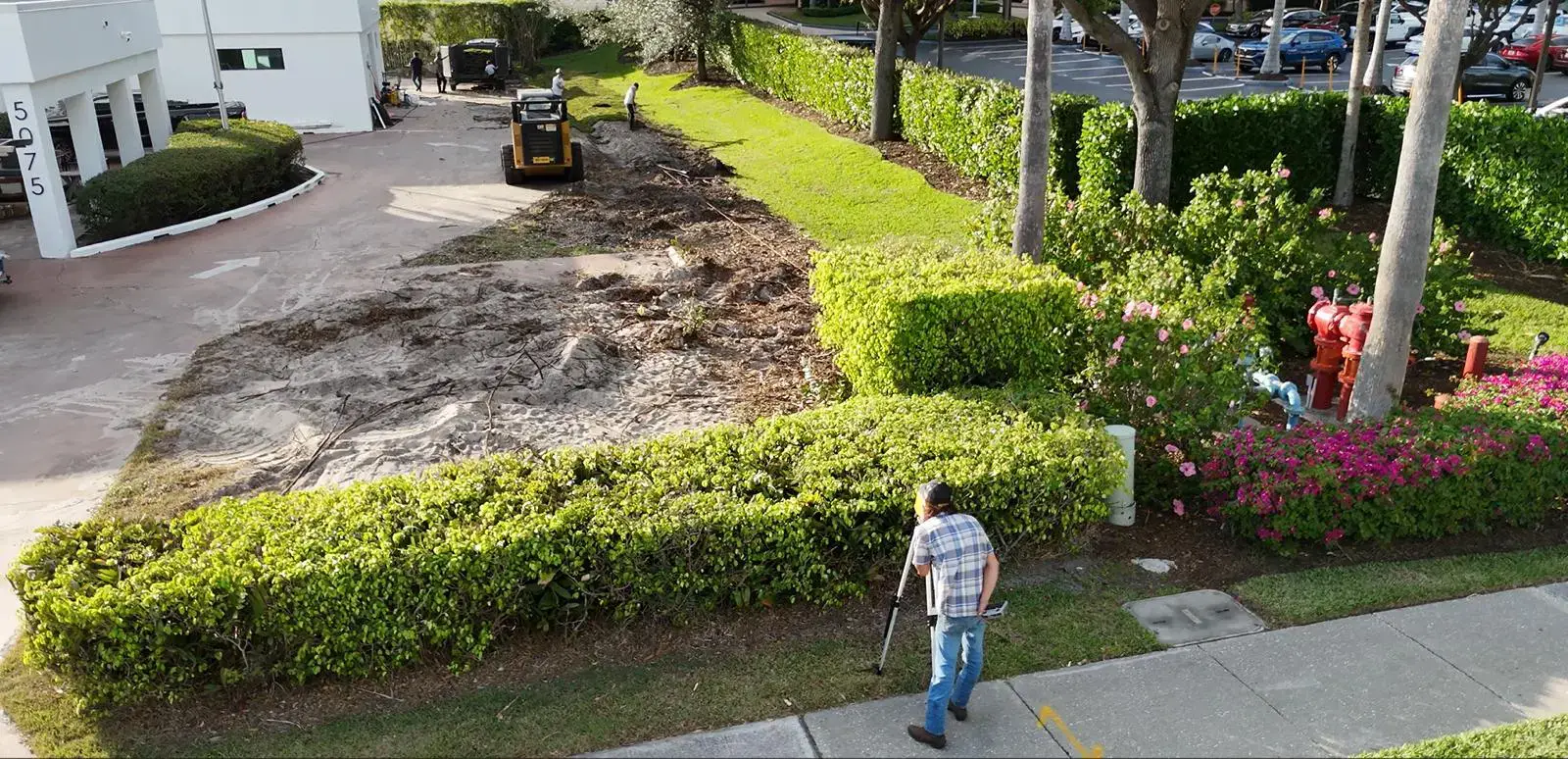
The route in built to carry the trucks that come next, and trenching sequenced with the trades that follow so nobody starts by undoing our work.
What decides the package
Every stage of site development sets up the one after it, and the mistakes are cumulative: organics left in, fill placed too fast, drainage worked out last. These are the decisions that determine what the package costs and how long it takes.
An engineered site plan sets finished elevation, drainage and setbacks, and everything gets held to it. Without one, the target is whatever keeps water off the structure and gets a builder onto the lot. Both are workable. They are not the same scope.
The gap between existing grade and required finished floor decides the fill volume, and fill volume decides most of the price. A foot across a quarter acre is hundreds of yards of material. This number gets worked out before anything else.
Cutting high ground to fill low ground moves material without buying any. A site that balances is dramatically cheaper than one that imports every yard. Whether yours balances depends on the plan and the topography, and it is one of the first things worth checking.
Topsoil, roots and muck get stripped out before fill goes on. Organic material left under a pad rots and compresses, and the slab follows it down. Proof rolling finds the soft spots that look fine from the surface.
Compaction is not a step at the end, it happens continuously. Material goes in lifts, worked to the moisture it needs, so the pad holds the elevation it was built to instead of settling into it over the first year.
Drainage is designed into the grade, not corrected afterwards. Swales, contours and the fall away from the structure are shaped as the pad is built. Retrofitting drainage into finished ground costs more than building it right the first time.
The route in has to hold concrete trucks and delivery loads, not just our machines. An access road built to the wrong standard becomes the first thing that fails and the first thing that has to be rebuilt.
Utilities, the surveyor, the testing lab and the builder all have to fit in the right order. Trenching after the pad is finished means cutting up work that was just paid for. The sequence is coordinated before equipment moves in.
How this gets priced
Site development quotes look complicated and mostly are not. Fill volume dominates, and everything else is a modifier on it. Understanding which line is which is what lets you compare two proposals honestly.
Send the plans, or the address and what you intend to build. You get one scope covering the whole sequence with the assumptions written down, instead of five contractors each quoting their own piece and nobody owning the gaps between them.
Where we run site development
Every area below has its own site development page — local coverage, real projects nearby and the same owner-operated crew out of Naples.
Before you call
Both. With a plan set we build to the elevations and the drainage it specifies. Without one, we work to what keeps water off the structure and gets the site usable, and we tell you where a plan would be worth having. Anything permitted or inspected generally needs the plan.
The testing is done by an independent geotechnical lab, and that independence is the point, so it is not something a contractor should be marking its own homework on. It is usually ordered by the owner, the builder or the engineer. We coordinate the schedule around it so the lab is there when the lifts are ready.
Either. Balancing the site is checked first because it is almost always cheaper. If the elevation gain is more than the site can supply, fill gets imported and that volume goes on its own line so you can see exactly what it costs.
Permitting normally sits with the owner, the builder or the engineer, because it is tied to the plan set and the parcel rather than to the earthwork. We work to the approved plan, and we tell you on the walk what we can see that is likely to need one.
Yes, and it often should be. Access and pad first so the builder can mobilize, finish grading and drainage later. Phasing adds mobilizations, so it is a real cost, but it is usually smaller than the cost of a builder waiting on ground.
Days to weeks, driven almost entirely by fill volume and how much material has to be trucked. A site that balances and needs modest elevation moves quickly. One importing hundreds of yards is a truck logistics problem before it is an earthwork problem.
Clearing is one step inside it. It opens the parcel. Site development is the whole sequence that turns an open parcel into ground a builder can mobilize onto: stripping, fill, compacted pads, drainage and access. If all you need is the lot opened, clearing on its own is the cheaper answer, and we do that too.
Ground at the elevation it is supposed to be, water leaving where it is supposed to leave, and a route in that carries the trucks coming next. In practice, a site the next trade can start on without fixing anything first.
Hector TractorNaples, FL · +1 (239) 359-8463
Tell us the address and what needs to happen. You get a clear scope, a real schedule and one crew that owns the work.